3 min · June 24, 2026
High standards and safety are not opposites. You need both, or you get neither.
If you've read much of what I write here, you'll have noticed I'm a standards person. Boundaries. Controls. Competency maps. Decisions that have to be sound, owned and on time. So Amy Edmondson's work landed on me with a useful sting, because it names the thing all that discipline can quietly destroy if you're not careful: the willingness of your people to tell you the truth.
Her idea is psychological safety, the belief that you won't be punished or humiliated for speaking up with a question, a concern, a mistake or a dissenting view. And the part that grabbed me is what she's spent years correcting: psychological safety is not softness and it is not the enemy of high standards. She plots the two on separate axes. High standards with low safety isn't excellence, it's an anxiety zone, people who want to do well but are too afraid to say what they actually see, which curdles into burnout. High safety with low standards is just a comfortable place where nothing ships. Only the corner where both are high produces what she calls the learning zone. Standards and safety aren't a trade-off. They're the two legs you need to stand at all.
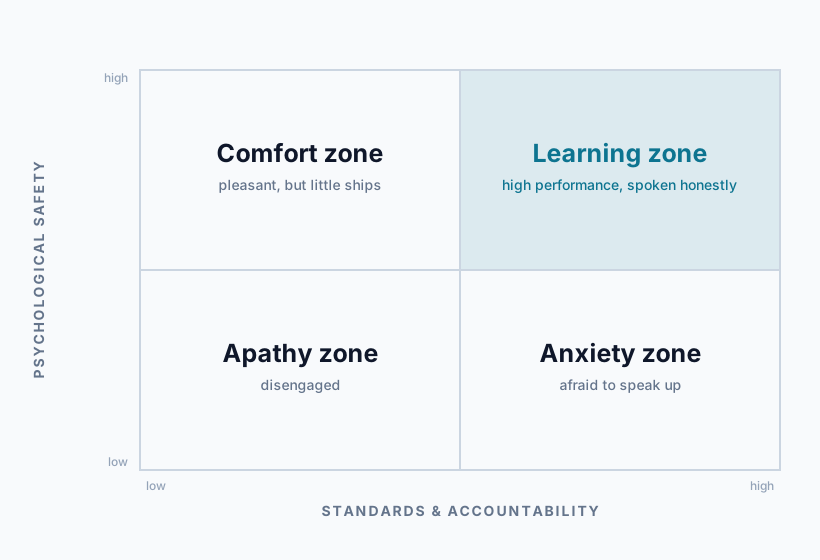
That reframed something I'd half-sensed but never said plainly. I can build the cleanest boundaries and the sharpest competency matrix in the world and if my team is quietly afraid of me, all I've built is a beautifully organized place where no one tells me the bug is worse than it looks. The structure doesn't save you. The truth does and the truth only flows when people feel safe enough to send it upward.
Edmondson offers a test I haven't been able to unhear. Listen to your team and ask what you mostly get: good news or bad news? Progress or problems? Statements or questions? Agreement or dissent? If it all leans to the comfortable side, it feels lovely to lead that team and you're almost certainly missing something. Because the leader's chair is exactly the seat with the least access to the truth. People manage their impression around you. Your standards, if they're not paired with safety, just make them manage it harder.
This is why I've come to care as much about the rituals that pull bad news upward as I do about the ones that drive standards down. A standup that asks what we got wrong, not just what we shipped. Postmortems that hunt the cause, not the culprit. Debates where people argue hard and stay friends, because they know the disagreement is about the work and won't be held against them. None of that lowers the bar. It's what makes a high bar survivable and honest.
Edmondson says a leader has two jobs: hold high standards and build an environment where people feel safe enough to meet them out loud. For a long time I'd have told you the first job was the real one and the second was nice if you could afford it. I had it backwards. The standards were never going to work without the safety. I just couldn't see it, because from the leader's chair, a fearful team and a flawless one can look exactly the same.
High standards without safety doesn't get you excellence, it gets you a team too scared to tell you the truth. Hold the bar high and make it safe to speak, or the bar is just decoration.